
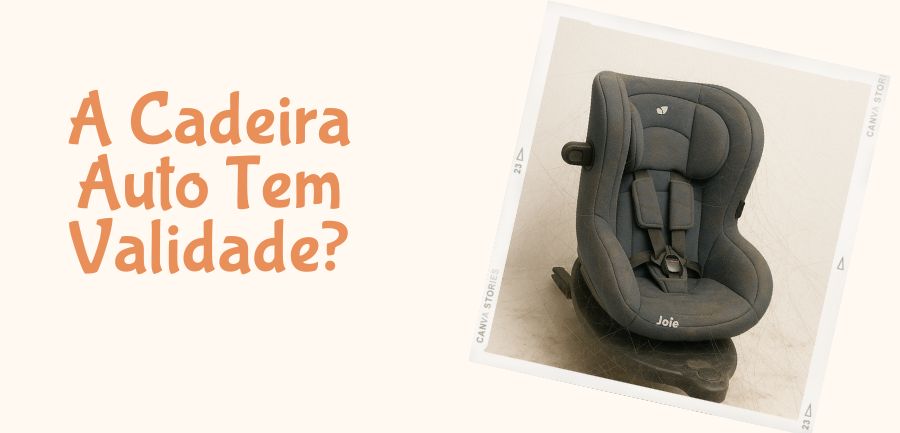
Does Your Car Seat or Infant Carrier Have an Expiry Date? Essential Gotu Guide
Your child's safety in the car is your number one priority, right? You know that using a car seat (or 'infant carrier') is mandatory and saves lives. But there is a detail that many parents forget or are unaware of: the car seat's expiry! Yes, just like many other products, especially safety-related ones, car seats and infant carriers do not last forever. They have a recommended service life, an "expiry date," which is crucial to ensure maximum protection.
In this Gotu.pt guide, we are going to demystify everything about car seat expiry in Portugal. Keep reading to find out why it’s important, what the law says, how to check your seat, and the risks of using one past its expiry date.
Why is Car Seat Expiry So Important?
It may seem strange, but car seats were not made to last for eternity. There are very concrete reasons why manufacturers recommend a period of use:
- Plastic Becomes Brittle: The main structure of the seat is made of plastic. Over time, exposure to the sun (UV rays), the large temperature fluctuations inside the car (extreme heat and cold), and natural aging cause the plastic to lose strength and become brittle. In a collision, it may not withstand the impact.
- Protective Foam Loses Effectiveness: The foams that absorb impact energy (such as EPS or EPP) also degrade. They can become stiffer and lose the ability to cushion the shock, especially in the head area.
- Belts and Buckles Wear Out: Harness straps suffer wear and tear from use, adjustment, and sun exposure, which can weaken them. Metal parts, such as buckles, can rust or jam.
- Safety Standards Evolve: Technology and safety tests are always improving! An older seat was tested under less demanding standards (like the old R44) than current ones (R129/i-Size), which include mandatory side-impact tests, for example.
Important: Many of these signs of aging and degradation are not visible to the naked eye! The seat may look perfect on the outside, but it may no longer offer the ideal protection.
What Does Portuguese Law Say About Expiry?
Here is an important point: Portuguese legislation (Article 55 of the Highway Code) requires the use of a Child Restraint System (CRS) that is approved (according to European standards R44/04 or, preferably, the more recent R129/i-Size) and adapted to the size and weight/height of your child.
However, the law does not specifically mention an expiry date that prohibits the use of a seat just because it has exceeded the manufacturer's recommendation. The responsibility falls on you, the user, to ensure that the seat is in good condition and is safe.
But be careful: the fact that there is no specific fine for using an "expired" seat (as long as it is approved and adapted) does not mean it is safe! Manufacturer recommendations exist for very valid safety reasons related to material degradation and the evolution of standards.
Note on Standards: Since September 2024, only new seats approved under the R129 (i-Size) standard may be sold. R44/04 seats purchased before that date can still be used legally (sources indicate for at least 8 years after the end of sale), but R129 represents a significant advance in safety (side-impact tests, mandatory rear-facing use up to 15 months, classification by height).
What Do Manufacturers Say? (Always Check Your Manual!)
This is where the information becomes crucial, but also more variable. Almost all manufacturers define a "service life" for their seats, which generally ranges between 6 to 12 years. But... there is no single rule and the official information for Europe/Portugal is not always as clear and accessible as it is in the US!
- The period can be counted from the date of manufacture or the date of first use/purchase.
- The duration may vary depending on the type of seat (an infant carrier may have a different expiry than a booster).
- Policies may differ between regions (US vs. Europe) and even between models from the same brand.
Therefore, the golden rule is: ALWAYS check the instruction manual of YOUR specific seat (the version for Portugal/Europe), look for the label on the seat itself, or contact the manufacturer's customer support in your region directly. Do not blindly trust generic information or information from other regions.
⚠️ Important Disclaimer: The following table compiles information found in sources (official and unofficial) and research, focusing on the European/Portuguese market whenever possible. However, given the variability and sometimes lack of official clarity, this table is INDICATIVE. The MOST RELIABLE information is always what is stated in your specific product's manual or provided directly by the manufacturer for your region. Always check!
| Manufacturer | Type of CRS (Example/General) | Recommended Service Life (Years - EU/PT Approx.) | Counting Basis (EU/PT Approx.) |
|---|---|---|---|
| Axkid | General (RF Focus) | 10 years | Date of Purchase / 1st Use |
| Britax Römer | Infant Carrier / Rotating Seat / Forward / Rear w/ Harness | 7 years | First Use |
| Britax Römer | Booster (Booster seat w/ backrest) | 10 years (Depends) | First Use |
| Cybex | General (Infant carriers, seats, boosters) | Variable, ~8-10 years | Variable (Can be Date of Manufacture or First Use - check manual) |
| Joie | General (Infant carriers, seats, boosters) | Variable and Model Dependent (~5-7 years for infant carriers/seats w/ harness; ~10 years for boosters) | Variable (Can be Purchase / First Use / Manufacture - check manual) |
| Kikkaboo | General | 6-8 years | Variable (Can be Purchase / First Use / Manufacture - check manual) |
| Klippan | General (RF Focus) | 10 years | Variable (Can be Purchase / First Use / Manufacture - check manual) |
| Lionelo | General | 6-10 years | Variable (Can be Purchase / First Use / Manufacture - check manual) |
| Maxi-Cosi | General (Infant carriers, seats, boosters) | ~10 years | Variable (Often from Date of Manufacture, but check manual) |
| Nuna | General (Infant carriers, seats, boosters) | 7-10 years | Date of Manufacture (DOM) |
| Thule | General (Infant carriers, seats, boosters) | 7-10 years | Date of Manufacture (or sometimes 1st Use - confirm with manual) |
I repeat: The table is a guide. The final word on the service life of YOUR seat is in its manual or on its label! For brands like Kikkaboo, Klippan, and Lionelo, where public information is scarce, checking the manual or contacting the manufacturer/retailer is even more crucial.
How to Find the Date of Manufacture or Expiry on Your Seat?
Okay, how do you find this crucial date? Look for:
- Sticker Label: This is the most common. Look on the base, on the back, or on the sides of the plastic structure. It may indicate the "Date of Manufacture" (DOM) or, more rarely in Europe, an explicit expiry date ("Do not use after..."). Do not confuse this with the orange approval label (R44 or R129)!
- Markings Embossed on the Plastic: Sometimes, the date is molded directly into the plastic, often on the bottom. It may be one or more "clocks" with arrows pointing to the month/year, or a matrix of dots.
- Instruction Manual: The manual should indicate the recommended service life and where to find the date on the seat. Always keep it!
- Manufacturer's Website or Customer Support: If you cannot find the date or have lost the manual, consult the official brand website for your model or contact customer support for Portugal/Europe.
The date of manufacture is the most common reference you will find. Then, check the manual to see how many years of service life you have from that date, or if the count starts from first use.
The Real Dangers of Using an Expired Car Seat
Using a seat past its expiry date is no joke. In the event of an accident, your child's safety can be seriously compromised:
- Plastic May Break: The weakened structure can crack or shatter upon impact, failing to protect the child.
- Impact Protection Fails: Aged foams do not absorb collision energy as well.
- Belts May Snap: A weakened harness may not be able to hold the child firmly.
- Outdated Safety Technology: The seat may not meet the latest and most rigorous safety standards.
- Hidden Risk (Used Seats): If the seat is used and expired (or close to it), you do not know if it has already been in an accident (even a minor one) that damaged it internally, or how it was stored. It is an added risk!
- False Sense of Safety: You may think you are protecting your child, when in reality the seat no longer guarantees the safety it was designed for.
Gotu Recommends: Quick Tips for Maximum Safety
To ensure that your little passenger always travels as safely as possible:
- Check Expiry: Find the date of manufacture on your seat and confirm the recommended service life in the specific manual for your model or by contacting the manufacturer.
- Respect the Deadline: Replace the seat when it reaches the end of its recommended service life. Don't risk it!
- Be Very Careful with Used Seats: Avoid seats of unknown origin. If it is the only option, inspect it thoroughly, check the dates, and try to find out its history, but remember that there are always risks.
- ALWAYS Replace After an Accident: Any seat that has been in a car during an accident (even if it looks minor and without visible damage) must be replaced. It may have invisible internal damage.
- Prefer the R129 (i-Size) Standard: When buying a new seat, opt for R129 models. They offer safety tested to the latest standards.
- Perfect Installation and Adjustment: A valid seat is useless if it is poorly installed or has a loose harness. Follow the manual strictly and check the installation of your car seat, with or without ISOFIX, in 3 minutes.
Conclusion: Your Child's Safety Has No Expiry!
Although Portuguese law does not directly fine you for using an "expired" car seat (as long as it is approved and adapted to the child), your child's safety is worth much more than the minimum legal compliance. The degradation of materials and the evolution of standards are real.
Respecting the service life recommended by the manufacturer is an act of responsibility and love, ensuring that the seat works as expected when you need it most. Do not delay: go check your car seat or infant carrier date right now and, above all, consult the manual!
The seats we chose for our own children
The ADAC score combines safety, ease of use, and ergonomics into an average. Here, we first look at the time the child travels rear-facing: rear-facing up to 125 cm, with the Swedish Plus Test as a reference. These three pass the Plus Test.
 Plus TestAxkid ONE 3+From birth to 125 cm or 23 kg, always rear-facing. Installation with ISOFIX and support leg.849.90 €View seat
 Plus TestAxkid Minikid 4 ProFrom 61 to 125 cm or 36 kg, rear-facing until about 7 years old. Installation with the car seat belt, support leg, and tethers.529.90 €View seat
 Pre-order · DecemberAxkid Minikid CoreThe new Minikid, from 40 to 125 cm or 28 kg. Reserve yours now, for delivery in December.429.90 €View seat
At the Safe Travel Consultation, Liliana and Helder look at your car and your child and tell you which seat fits. The 100 € from the consultation becomes a voucher for the seat, in the online store or in Barcelos.
Book consultationPrices valid as of October 8, 2026.
At Gotu.pt, we care about every trip your family takes. Travel safely!